BREAKING: PRESIDENT SIGNS GOVERNMENT FUNDING BILL THAT BANS MOST HEMP PRODUCTS

Federal Ban on Intoxicating Hemp Products: What It Means for the Hemp Industry

On November 12, 2025, President Trump signed legislation to end the government shutdown that includes a federal ban on most hemp products that contain THC and other hemp-derived “cannabinoids.” The new law goes into effect a year from now.

If it goes into effect as it is currently written, it will dramatically impact the multibillion-dollar hemp industry across the nation, including in states like Georgia that have already passed comprehensive legislation to regulate hemp products containing CBD, THC, and lesser-known cannabinoids like Delta-8-THC, HHC, and THCP. In effect, the law will ban most of the consumable hemp products currently on the market.

The new law does this by changing the federal definition of “hemp” to exclude most products containing THC and other hemp-derived cannabinoids that have become popular since Congress legalized hemp in the 2018 Federal Farm Bill. Supporters of the ban have stated that they intend to close a “loophole” in the Farm Bill that unintentionally allowed the sale and manufacture of intoxicating hemp products that are no different than illegal marijuana.

President Trump has previously expressed support for hemp products in the past, but he indicated prior to passage of the bill that he “supports the current language in the bill on hemp.” He ultimately signed the bill without commenting on the hemp provisions. 

While some legislators have vowed to propose additional legislation to reverse some of these changes and replace the bans with regulations over the next year, hemp businesses and other stakeholders should familiarize themselves with the bill, explained in detail below, and be prepared to comply with its new regulations and prohibitions.

Current Hemp Laws Under the 2018 Farm Bill

In 2018, President Trump signed the 2018 Federal Farm Bill into law, landmark legislation that legalized a wide range of cannabis and cannabis products by excluding “hemp” from the definition of “marijuana” and “THC,” both of which remain controlled substances under federal law. 

Under the Farm Bill, “hemp” was broadly defined to include any cannabis plant, and any part of the plant, derivative, extract, or cannabinoid from the plant, that contains 0.3% or less of “Delta-9-THC,” the cannabinoid most commonly known for giving users a “high.” 

The cannabis plant naturally produces over a hundred cannabinoids, including non-intoxicating cannabinoids like CBD and CBG as well as intoxicating cannabinoids like Delta-8-THC, HHC, THCA, and THCV. Marijuana and hemp have the same cannabinoids but produce them in different quantities. Hemp produces more CBD; marijuana produces more THC.

All of these cannabinoids can be extracted from either plant. When it comes to hemp-derived cannabinoids, CBD is extracted from the hemp plant directly and processed into a concentrated form. Hemp-derived CBD can then be synthesized into Delta-8-THC, HHC, THCV, and other “minor cannabinoids” through a series of chemical conversions.

The Farm Bill’s broad language legalized the sale and possession of a variety of cannabis products containing hemp-derived cannabinoids, including vapes, edibles, flower, oils, wax, and other products resembling illegal marijuana and THC products, as long as the total cannabinoid content was less than 0.3% Delta-9-THC. Most states, including Georgia, enacted their own legislation to legalize hemp and regulate the various kinds of hemp products on the market.

The New Law Effectively Bans Most Hemp Products Currently on the Market

As it currently stands, the new law will effectively ban most hemp products currently on the market by changing the federal definition of “hemp.” The new definition of “hemp” will exclude certain categories of hemp products, such as those containing synthetic cannabinoids or more than trace amounts of THC and other intoxicating cannabinoids.

If they are excluded from the definition of “hemp,” these hemp products will be treated as controlled substances under federal law going forward, meaning that the sale and possession of these products will be a federal crime.

The new law makes three main changes that, taken together, would ban most hemp products on the market:

1. The new law effectively bans all THCA products by changing the legal THC limit so that all hemp products must contain 0.3% or less of both Delta-9-THC and THCA combined.

Under the new law, “hemp” has been redefined as “the plant Cannabis sativa L. and any part of that plant, including the seeds thereof and all derivatives, extracts, cannabinoids, isomers, acids, salts, and salts of isomers, whether growing or not, with a total tetrahydrocannabinols concentration (including tetrahydrocannabinolic acid [THCA]) of not more than 0.3 percent on a dry weight basis.” 

In other words, the legal THC limit has changed from 0.3% delta-9-THC to 0.3% “Total THC,” which accounts for the amounts of both Delta-9-THC and THCA in a product. This change alone will eliminate almost all THCA products from the market once the new law goes into effect, since the vast majority contain well over 0.3% THCA. 

One popular product that will be prohibited once the new law goes into effect, for example, is “THCA flower” that contains high levels of THCA and under 0.3% delta-9-THC. Notably, THCA turns into delta-9-THC over time or when exposed to heat. 

The definition of “hemp” under the 2018 Farm Bill excluded THCA from the THC limit that distinguished hemp from marijuana. That led to confusion in the industry and among law enforcement officials whose testing methods cannot distinguish delta-9-THC from THCA. That confusion led to raids and arrests of hemp business owners who were selling legal products. It remains to be seen whether the new law will solve that problem.

2. The new law prohibits consumable products containing “hemp-derived cannabinoids” that were “synthesized or manufactured outside the plant.”

In addition to the effective ban on THCA products, the new law effectively bans another category of hemp products by changing the definition of “hemp” to exclude “hemp-derived cannabinoid products” that contain cannabinoids that were “synthesized or manufactured outside the plant.” The law also excludes “intermediate hemp-derived cannabinoid products,” such as oils, distillates, and isolates that are “marketed or sold as a final product or directly to an end consumer for personal or household use.” 

As noted above, most hemp-derived cannabinoids must be extracted from cannabis through a series of chemical conversions. In most cases, that starts with extracting CBD from the hemp plant, and then converting the CBD to other minor cannabinoids like Delta-8-THC, HHC, THCV, and others. This generally requires lab equipment. 

By using broad language banning any hemp-derived cannabinoid that was “synthesized or manufactured outside the plant,” the new law will effectively ban all vapes, edibles, oils, flower, and other products containing these hemp-derived cannabinoids.

3. The new law prohibits any product containing more than 0.4 milligrams of THC, THCA, and any other cannabinoid that produces “similar effects.”

Finally, as a sort of “catch-all” to ban any other hemp products that are potentially intoxicating, the new law redefines “hemp” to exclude any hemp products that contain more than 0.4 milligrams per container of combined THC, THCA, or any other cannabinoids that produce “similar effects” per container. 

The Department of Health and Human Services will determine what other cannabinoids create “similar effects” to THC. Either way, however, such a low milligram limit will effectively ban the vast majority of hemp products containing any form of THC. In fact, the milligram limit may also apply to full-spectrum CBD that is non-intoxicating but contains naturally occurring amounts of THC.

What the Hemp Ban Means for the Hemp Industry

If the new law goes into effect a year from now as it is currently written, any cannabis product that no longer qualifies as ‘hemp’ will be considered illegal marijuana or THC under the federal Controlled Substances Act. The narrower definition of “hemp” under the new law will effectively ban most hemp products currently on the market, even potentially non-intoxicating products like CBD and other hemp-derived cannabinoids.

Hemp products like vapes, drinks, edibles, and pre-rolls containing Delta-8-THC, HHC, THCP, and other minor cannabinoids extracted from hemp will lose their classification as legal hemp products and become controlled substances, even in states like Georgia where such products are legal and regulated. THCA products like THCA flower, while already prohibited in Georgia, will become illegal controlled substances nationwide.

These changes will gut the hemp industry as we know it. According to one representative, “the hemp industry supports 320,000 American jobs, generates $28.4 billion in regulated market activity, and produces some $1.5 billion in state tax revenue.” The U.S. Hemp Roundtable said that this proposal would wipe out 95% of the U.S. hemp industry. The new law will affect farmers, manufacturers, retailers, and consumers—every stakeholder in the hemp industry.

As noted, the new law provides a 365-day grace period before it goes into effect. Accordingly, hemp businesses have a year to review these new changes and restrictions and comply with them or challenge them in court.

Can the hemp ban be challenged in court?

Even if the hemp ban goes into effect as written, the hemp industry can and should fight back by challenging the law in court. While the federal government has discretion to regulate and prohibit certain kinds of hemp products, it must do so clearly and provide affected stakeholders and businesses with due process.

One potential challenge to the new law, for example, could be brought against any efforts by the government to ban hemp-derived Delta-8-THC as “synthesized or manufactured outside the plant.” Most chemical processes involving the manufacturing of Delta-8-THC are “semi-synthetic,” not synthetic, and Delta-8-THC can be extracted from hemp. Accordingly, certain Delta-8 products may not fall under this ban. 

Additionally, the government’s attempt to prohibit products containing THC, THCA, and “any other cannabinoids that have similar effects,” as determined by HHS, can be attacked based on the unconstitutionally vague language that fails to provide lawful hemp businesses with sufficient notice of what cannabinoids are or are not allowed. There is also an argument that this language is unlawful under the “non-delegation” doctrine, under which Congress cannot delegate major questions to agencies like HHS.

Additional legal challenges may be available based on how federal agencies like the FDA and HHS interpret some of these new definitions. Agencies must comply with certain procedural and legal requirements before implementing new rules, and those rules must be consistent with their authorizing statute.

In short, there may be several challenges that the hemp industry can raise even before the new law goes into effect. However, the federal government will push back hard, and it is important that any effort to strike down this new law be led by experienced advocates well-versed in legal and scientific issues involving hemp.

Contact Our Federal Hemp Attorneys

Are you a hemp retailer or producer concerned about the new federal hemp ban? Our firm also stands ready to bring legal challenges to this new law, and we have a proven track record of obtaining injunctions and other relief against government officials targeting lawful hemp businesses.

Our Firm Obtains Dismissal of Felony Marijuana and Gambling Charges in Lee County Smoke Shop Case

Last week, our firm obtained a dismissal of felony marijuana and gambling charges that were brought against the owner of a smoke shop, his wife, and his employees in Lee County, Georgia. This case is just the latest in a long line of cases in which law enforcement officials have falsely charged a hemp business with selling illegal marijuana instead of legal hemp products. As in those cases, we used our unique expertise in marijuana cases to win.

In an unusual twist, this case also involved allegations of illegal commercial gambling through the smoke shop’s operation of several coin-operated amusement machines (COAMs). The police alleged that our client’s store was engaging in illegal gambling by giving cash awards to COAM winners rather than in-store gift cards, in violation of Georgia’s COAM regulations.

Based on our expertise in Georgia’s hemp laws and our firm’s aggressive approach to defending our clients, we were able to convince the prosecutor to dismiss all of these charges against our clients and agree to seal their arrest records. We did so by providing lab tests from our client’s suppliers, identifying weaknesses in the State’s lab results, and obtaining  impeachment evidence that would have discredited the lead investigator in the case and other State’s witnesses.

Police raided our client’s Smoke Shop based on unreliable test results of hemp products they purchased “undercover.”

Earlier this year, police raided our client’s smoke shop, seized cash and thousands of dollars of hemp inventory, and arrested our client, his wife, and several of his employees. The raid came after Lee County officers conducted a year-long investigation where “undercover” officers bought products from the store and then tested them. The officer would also play the COAM machines at our client’s store and request his winnings in cash, which our client’s employees allegedly gave him.

The “undercover” purchases in this case are common in smoke shop cases, which are built on test results of products obtained from the smoke shops. Of course, “undercover” investigations are totally unnecessary in these cases since smoke shops are allowed to openly sell legal, intoxicating cannabis products to police officers and members of the public alike. 

The State ultimately filed an Accusation alleging multiple felony counts of Sale of Marijuana under O.C.G.A. § 16-13-30(j)(1) and Violation of Gambling Prohibition under O.C.G.A. § 16-12-35. The marijuana charges were based on allegations that certain products purchased at our client’s store tested over the legal limit of THC and that our client knew they would when they sold them.

In 2019, the Georgia legislature legalized specifically excluded hemp and hemp products from the definition of marijuana, setting the legal limit at 0.3% total delta-9-THC concentration. This legalized a broad variety of cannabis products that look and smell like marijuana. Hemp and marijuana also contain the same “cannabinoids,” like CBD and THC, but in different quantities.

The problem with the State’s case was that their testing methods, especially the field tests they used, are not capable of distinguishing marijuana from certain hemp products, namely the THCA flower that the officers purchased in this case. The State also did not make an effort to preserve the seized cannabis for reliable testing, allowing compliant hemp to “decarboxylate” and degrade into a non-compliant product.

As for the State’s gambling-related charges, the State relied on a misreading of the law. The State initially tried charging our client with illegal commercial gambling. Providing cash payouts for COAM winners is a violation of Georgia’s COAM laws, however, not illegal commercial gambling. After we pushed for a hearing on the charges, the State reduced the charge to a misdemeanor to avoid a hearing before eventually dismissing them altogether.

All charges were dismissed after our firm filed motions challenging the State’s test results, the constitutionality of the search and the charges, and the State’s failure to distinguish between marijuana and hemp.

Fortunately, our client turned to us after the raid of his store and the arrest of his employees and his family. We prepared an aggressive defense distinguishing illegal marijuana from the hemp products that they sold, which were backed up by lab results from his vendors showing that the seized products were actually “hemp” under Georgia law.

We challenged the State’s search of our client’s store as unconstitutional under the Fourth Amendment, as the officer had not disclosed to the judge who issued the warrant that the hemp products in question were indistinguishable from marijuana without reliable testing.

We challenged the language in the State’s charging papers as legally inadequate for not distinguishing between hemp and marijuana as cannabis. And we challenged Georgia’s marijuana laws as “unconstitutionally vague” as applied to our client’s products, given the State’s rapidly changing hemp laws. When the State refused to produce evidence that the defense was entitled to, we challenged that too by filing a motion to compel evidence.

The final nail in the coffin in this case was when we provided the District Attorney’s Office with copies of independently sourced lab results from accredited labs and invoices from legitimate vendors, all showing THC concentrations below the legal limit. Rather than fight us in court, the State dismissed all of the charges and agreed to seal our client’s arrest record.

Call our firm if you have been charged with felony marijuana offenses.

We were proud to obtain the best possible outcome for our client, his employees, and his business. The result in this case reflects the aggressive playbook we have fine-tuned through winning many similar cases involving cannabis and our aggressive representation of smoke shops that have been wrongfully accused of selling marijuana.  

If your hemp or COAM business has been targeted by law enforcement, contact us. Our firm has extensive experience in these kinds of cases and will fight for you.

Operation Vape Trail: Smoke Shop Charges, Seizures & DEA Laws

DEA Targets Smoke Shops Selling THC and Hemp Products in “Operation Vape Trail”

Business owners selling THC vapes, kratom, and other smoke shop products are increasingly being targeted for arrest and civil asset seizures by federal law enforcement agencies. The Drug Enforcement Administration (DEA), for example, recently put out a press release announcing that it had conducted several raids at smoke shops across the nation as part of “Operation Vape Trail.”

According to the press release, the DEA has been targeting businesses and individuals that purportedly sell illegal marijuana and psilocybin mushrooms. In total, the DEA claims that the agents conducting these raids have seized 2.3 million products containing THC, marijuana, and other substances, about $3.5 million in cash, more than $5.2 million in seized assets, and 115 firearms. The raids have resulted in at least 106 arrests as well.

While it appears that some of these businesses may have been operating illegally or knowingly selling illegal substances, it also appears that several of them are being unfairly targeted based on the government’s misinterpretation of the law, especially federal hemp laws which legalized a broad variety of cannabis products. 

Operation Vape Trail is the latest development in a trend of federal law enforcement agencies aggressively targeting smoke shops and other similar businesses. The raids in Operation Vape Trail come after a recent raid by other federal agencies in September that resulted in the seizure of 4.7 million Chinese e-cigarette products in Chicago. The Justice Department and Food and Drug Administration (FDA) formed a multi-agency task force in June 2024 to investigate illegal e-cigarette distribution and sales, pleading to “bring all available criminal and civil tools to bear against” the distribution of illegal e-cigarettes. 

Is the government targeting all smoke shops?

Not all smoke shops are being targeted by federal law enforcement, but all smoke shops are at risk of government overreach. While the government claims that it is only targeting those who market and distribute illegal or counterfeit products, the government has targeted innocent main street businesses too. 

The raids conducted as part of “Operation Vape Trail,” for example, suggest that the DEA is pursuing smoke shops and vape stores that are selling THC vapes and other hemp products containing THC and cannabinoids. The FDA has conducted several raids as well.

What kinds of smoke shop products are being targeted by the federal government?

Federal law enforcement agencies like the DEA and the FDA are increasingly targeting hemp products and other smoke shop products containing substances that are either legal or that exist in a legal grey area. Notably, for example, the products targeted in Operation Vape Trail were not limited to legal nicotine vapes.

According to the DEA, the seized products in Operation Vape Trail fall into four main buckets:

  1. THC products including THC vapes, THC edibles such as gummies and candies, THC-infused cannabis flower, and pre-rolled cannabis cigarettes. It is unclear whether these products were actually illegal marijuana or legal hemp products that the DEA mistook for illegal controlled substances. There has been an unfortunate trend of police mistaking legal hemp products for illegal THC or marijuana.
  2. Products containing other hemp-derived intoxicating cannabinoids such as delta-8, delta-10, HHC, THCP, and THCA. These products may resemble illegal THC and marijuana products but are legal under the 2018 Farm Bill and various state laws as long as they are under 0.3% delta-9 THC. Notably, the DEA treats THCA as delta-9-THC after decarboxylation when distinguishing hemp from marijuana, which is a flawed and incorrect method that has been challenged in court. Unfortunately, some of these hemp products can be defective and contain over the legal limit of THC without the store owner’s knowledge, though those store owners have a strong defense against criminal charges if they relied on lab results and vendor representations that the products were compliant hemp.
  3. Non-cannabis psychoactive products such as mushroom-infused gummies, nitrous oxide (or “whippits”), bath salts, and synthetic kratom products (hydroxymitragynine, or 7-OH for short). While some of these products are illegal, some of them are not. Amanita mushrooms, for example, are a legal and common type of psychoactive mushroom that are often mistaken for psilocybin mushrooms, which are illegal under federal and most state laws. Moreover, the FDA has moved to schedule several of these products that are currently legal. Some products, like “whippits,” are illegal to sell for certain purposes.
  4. Nicotine e-cigarettes that are unauthorized under FDA rules. That could include counterfeit products or mislabeled products.

Can smoke shop owners and employees be charged with a crime for selling THC vapes?

While THC vapes are legal under federal law if they contain less than 0.3% Delta-9-THC, many compliant retailers are still at risk of getting targeted by the DEA and other federal agencies based on misinterpretations of the law or due to the patchwork of inconsistent and contradictory state and federal laws governing hemp products.

Mom and pop smoke shops must rely on their supplier’s test results and Certificates of Analysis (COA) to determine whether their products are legal, all the more difficult when legal limits and packaging requirements vary state by state. Unfortunately, inconsistent and unclear laws have led law enforcement to target law-abiding businesses and individuals.

What federal crimes could smoke shop owners be charged with?

Primarily, criminal charges against smoke shops and their owners will usually be brought under the Controlled Substances Act (CSA). Any THC product containing more than 0.3% delta-9 THC by dry weight is classified as a Schedule I drug under federal law. Common felony charges include distribution or possession with intent to distribute under 21 U.S.C. § 841, maintaining a “drug-involved premises” under 21 U.S.C. § 856, and civil or criminal forfeiture of seized assets under 21 U.S.C. § 881. The CSA also criminalizes synthetic cannabinoids, opioids, and psilocybin mushrooms.

For nicotine products, the Food, Drug, and Cosmetic Act (FDCA) and Family Smoking Prevention and Tobacco Control Act are in play. The FDA has interpreted e-cigarettes and other “electronic smoking devices” as subject to the tobacco regulations. Except for a small set of authorized products, selling e-cigarettes can result in fines and imprisonment under the FDCA.

Additionally, Congress has amended the Prevent All Cigarette Trafficking (PACT) Act to prohibit the sale of tobacco products to people under the age of 21, and to ban the mailing of vapes and other smokeless tobacco products using the United States Postal Service.

Are state law enforcement agencies also conducting raids against smoke shops?

Yes. There have been several cases involving state and local law enforcement agencies conducting raids and arrests at smoke shops and vape stores. These cases often involve issues arising under state laws governing hemp/marijuana, e-cigarette regulations, sales to minors, licensing, public nuisances, or even RICO laws—racketeering crimes originally developed to target violent gangs, not local retailers. 

Because state laws regulating hemp, vapes, THC, and other smoke shop products can vary widely from state to state, a shop that is compliant in one state can be noncompliant in another. This can raise issues when purchasing from national or even regional wholesalers who may not know, or care, that some of their products are illegal to sell in certain states.

What defenses are available to smoke shop owners charged with federal crimes?

Innocent smoke shop owners usually have strong defenses against federal charges, especially if they work hard to stay in compliance with the law. The Supreme Court has held that federal drug charges require proof that the defendant knew they were dealing with an illegal drug.

The knowledge element can be critical in cases where the federal government has charged a retailer with selling THC products that were over the legal THC limit, but the retailer relied on lab results provided by a vendor that shows their products were compliant “hemp” under the Farm Bill. Even if the products were in fact over the limit, the defendant could introduce the lab results as evidence that they did not know that the product was over the limit.

Someone charged with selling illegal marijuana or THC products can also challenge the government’s testing and storage methods. This is especially pertinent in states where THCA is legal because THCA decarboxylates to delta-9 THC over time and when exposed to heat, meaning a compliant product can become non-compliant before it is tested by law enforcement. Many states also rely on testing methods that cannot distinguish between different types of THC and other hemp-derived cannabinoids.

There may also be chain-of-custody issues that arise in garden variety drug cases. The government is constitutionally required to save all lab results and data, custody forms, photographs, and other documents related to its investigation, and provide these to you and your attorney before trial.  

Just as federal drug charges require proof of a defendant’s knowledge, federal charges based on unlawful nicotine products also require evidence of a defendant’s criminal intent. Although a misdemeanor sale of unauthorized e-cigarettes under the FDCA has strict liability, the government must prove intent to defraud or mislead to secure a felony conviction.

The “good-faith guaranty defense” is available for FDCA violations under 21 U.S.C. § 333(c) for those who received products via interstate commerce in good faith and can furnish supplier identity and a signed U.S. guaranty that the goods were compliant.

And of course, in any criminal case, if the government violated your Fourth Amendment rights to privacy and property during the raid and search of your property, any evidence they obtain may be “tainted” and inadmissible against in court. If the police did not acquire a valid search warrant based on probable cause, or if the warrant was constitutionally deficient, the “fruits” of the search must be suppressed.

What best practices should businesses follow when selling THC vapes and other smoke shop products?

After any raid or inspection by law enforcement, having the right paperwork is often the difference between an administrative fix and criminal exposure. By following these best practices, you can reduce risk at the register long before an inspector walks in.

  • Buy only from licensed, U.S.-based vendors. Collect copies of their licenses, EIN and W-9, insurance, and a written guaranty that all products meet federal and state law. Require batch-specific COAs with each shipment and make vendor indemnity part of the purchase terms. 
  • Verify COAs before stocking. Ensure the COA matches the brand, product, flavor, and lot. Make sure it includes testing dates, methods, and lab accreditation. In some states, businesses must keep copies of the COAs for each of their THC products.
  • Maintain thorough records. Keep all vendor files, purchase order and invoices, COAs, QR screenshots, intake checklists, training logs, and SKU inventory.
  • Familiarize yourself with your state’s cannabis laws and regulations. Nothing can guarantee that a local district attorney or sheriff won’t overreach or misinterpret the state’s cannabis laws, but a firm knowledge of regulations and standards on retailers help minimize the chances of any misunderstandings. Stay in compliance and keep your license current.
  • For nicotine e-cigarettes, stock only products with FDA marketing orders. If in doubt, consult the FDA’s Searchable Tobacco Products Database of authorized products.

What should I do if I am arrested for selling THC products or other smoke shop products?

The first thing you should do is invoke your Miranda rights to remain silent and request an attorney prior to speaking to law enforcement. Do not consent to any searches and preserve surveillance footage and POS data. Then consult an attorney on what strategies you should pursue to ensure the best possible outcome given your unique circumstances.

If you’ve been arrested or charged with a federal crime based on the sale of smoke shop products like THC vapes, it’s critical to have an experienced criminal defense lawyer who understands both state and federal drug laws. Contact our firm.

The Church Law Firm has defended dozens of people and businesses facing cannabis-related charges, including based on the sale of legal vape and cannabis products. Our team understands the science and the law governing THC and hemp products and have secured favorable outcomes in THC product disputes and returns of seized goods. If your store has been searched, your inventory seized, or you received a federal or state notice, contact our firm today.

Hemp Update: Department of Agriculture rules that retail shops can sell Hemp “Pre-Rolls”

Hemp Update: Department of Agriculture rules that retail shops can sell Hemp “Pre-Rolls”

Our firm recently submitted a request for a declaratory ruling from the Georgia Department of Agriculture requesting their position on different issues arising under Georgia’s new hemp laws, including whether hemp cigarettes (“pre-rolls”) are legal to sell in Georgia. 

Specifically, we asked GDA to interpret language under SB 494, which went into effect on October 1, 2024, which prohibits the retail sale of hemp “flower,” defined as the leaves and buds of the cannabis plant. Read our firm’s breakdown of SB 494.

After significant deliberation and feedback from other state agencies, GDA issued Declaratory Ruling D.R. 2025-1. This ruling, along with our firm’s subsequent discussions with GDA attorneys, sheds light on the legal status of various consumable hemp products in Georgia and GDA’s current approach to enforcement. 

A full copy of the Department’s Ruling can be viewed here.

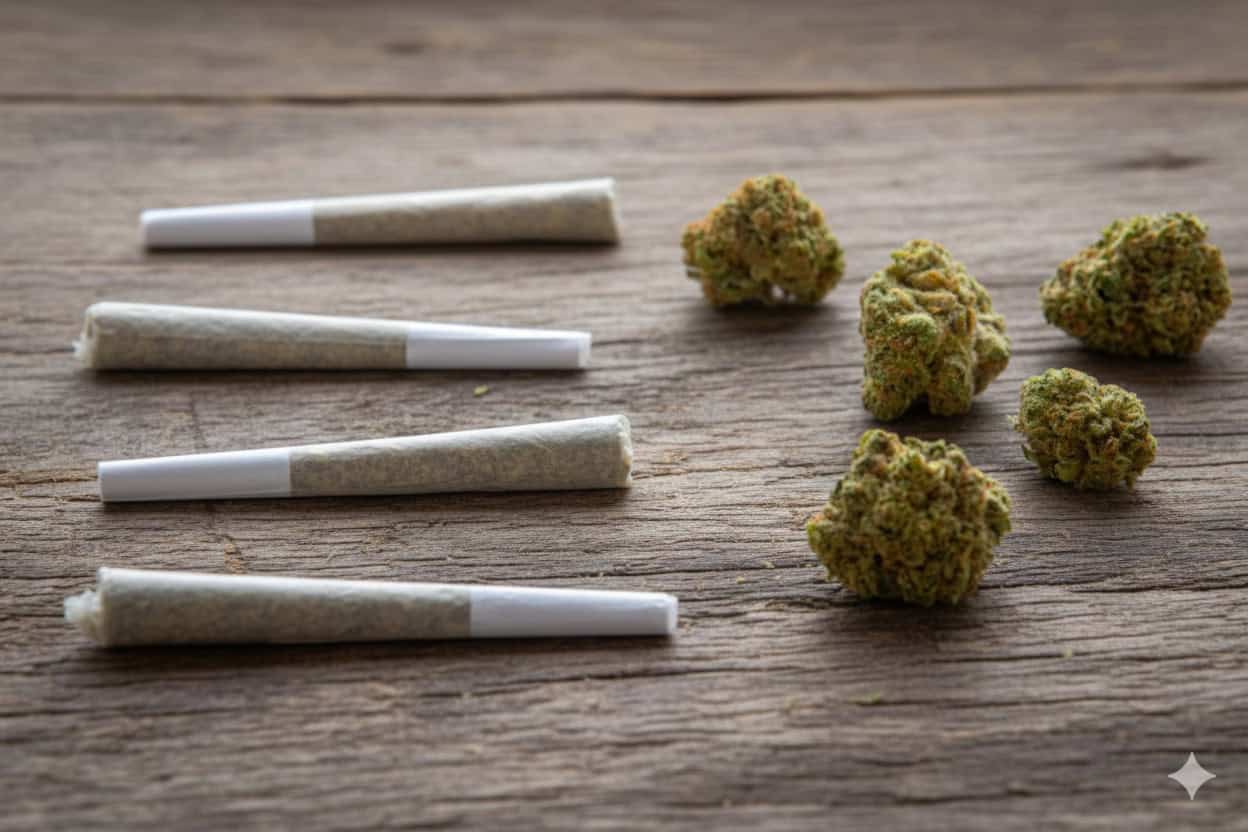
Hemp “Pre-rolls” on the left, loose hemp flower on the right

Hemp “Pre-rolls” on the left, loose hemp flower on the right

What is the law in Georgia regarding the legality of hemp flower and “pre-rolls”?

Are Hemp “Pre-Rolls” legal to sell in Georgia? 

Even though pre-rolled hemp cigarettes are made of hemp flower and intended for smoking, GDA’s ruling confirms that pre-rolls may still qualify as lawful “hemp products” under the Georgia Hemp Farming Act if they are sufficiently processed and otherwise comply with all other rules and regulations, such as containing less than 0.3% THC and complying with other labeling, packaging, and testing requirements.

GDA’s ruling explains that pre-rolls are considered “processed” hemp products rather than hemp “flower,” which cannot be sold at retail under SB 494. Such pre-rolls must still:

  • Contain less than 0.3% total delta-9-THC (accounting for THCA),
  • Comply with all testing, labeling, packaging, and advertising rules, and
  • Be sold only by businesses with hemp licenses.

There do not appear to be any serving size or milligram requirements for “pre-rolls,” unlike with gummies, beverages, and tinctures. 

To that end, it is important to remember that the form of a hemp product, i.e. flower versus pre-roll, does not determine whether it is legally “hemp” versus an illegal controlled substance. That strictly depends on whether the product contains less than 0.3% THC.

Is processed hemp flower legal to sell in Georgia?

The Georgia Hemp Farming Act and SB 494 prohibit the retail sale of loose hemp flower or leaves, regardless of their THC content. GDA has taken the position that simply drying, trimming, packaging, or otherwise handling hemp flower does not convert the flower into a lawful “hemp product” that can be sold at retail. Selling dried hemp flower is therefore a civil violation of Georgia hemp regulations.

GDA has not taken a position yet regarding other “flower” products that have been processed beyond drying, trimming, and curing, such as infused flower or “moon rocks.” These methods of processing include:

  • Cryo-infusion, which involves flash-freezing and drying hemp flower before submerging it in oil containing concentrated cannabinoids like Delta-8-THC, HHC, and THCV; 
  • Terpene reconstitution via hyper infusion or humidity-based infusion, which involves infusing hemp flower with terpenes through vapor diffusion and rehydration. This process involves the use of large, commercial scale machinery and alters hemp flower at the structural level;
  • Pelletization, which involves grinding up hemp flower and mixing it with concentrated cannabinoid oil, terpenes, and other substances, to create “pucks” or “pellets”;
  • Nanoemulsion infusion, which involves taking concentrated hemp-derived cannabinoids, terpenes, and other lawful substances and converting them into oil, which is then made water soluble through ultrasonification, high-pressure homogenization, microfluidification, and other processes. The flower is then coated with the oil mixture.
  • Simple infusion/spraying, which involves spraying hemp flower with distillate, concentrates, or oils containing hemp-derived cannabinoids, terpenes, and other lawful substances. “Moon rocks,” for example, are usually hemp buds that are coated in distillate oil and then rolled in finely grounded flower often called “kief.” 

Selling these products remains highly risky in Georgia since these products often have the same appearance as unprocessed “flower.” A business selling these products risks potential legal troubles and should have documentation and other evidence ready to show that the flower products being sold are highly processed.

What are the penalties for selling non-compliant hemp products?

GDA’s declaratory ruling on pre-rolls also states some of the potential penalties for selling non-compliant products or violating other hemp regulations. GDA has taken the position that the sale of loose flower, products that exceed the legal limit of THC, mislabeled products, operating a hemp business without a license, and other violations of Georgia’s hemp laws and regulations can result in:

  • Civil penalties (up to $5,000 per violation),
  • License denial, suspension, or revocation,
  • Criminal referrals in more serious cases (e.g., selling to minors, intentionally selling products exceeding the legal limit of THC). 

After SB 494 went into effect last year, GDA gave businesses a 90-day “grace period” to learn about the new regulations under SB 494, which also require businesses to apply for and obtain licenses to sell, manufacture, or test consumable hemp products. The grace period ended January 1, 2025.

Since then, GDA has been sending inspectors to retailers, wholesalers, and other hemp businesses to check their inventory, testing, and for compliance with all other hemp regulations. 

While most instances of non-compliance have so far resulted in warnings and confiscation of any non-compliant inventory, GDA has signaled a more aggressive approach, with several recent cases resulting in misdemeanor criminal charges for selling or possessing products that don’t comply with technical regulations relating to product packaging and labeling.

What are the implications facing the hemp industry?

While the clarity on the legality of pre-rolls is welcomed, there are still several “gray areas” regarding the legality of other hemp products, leaving the hemp industry and other stakeholders unsure of what kind of hemp products they can sell beyond pre-rolls. 

Based on the GDA’s reasoning in declaring hemp pre-rolls legal, for example, we would argue that certain highly-processed “flower” products such as moon rocks and infused/sprayed flower are legal for sale too. As noted, the GDA has not taken a position on those types of products. 

Despite gray areas in the law, GDA expects licensed retailers, wholesalers, and manufacturers to ensure they are selling legal products backed by authentic COAs from Department-approved labs and that meet the packaging, labeling, and testing standards set forth under SB 494. As noted above, GDA has recently initiated criminal proceedings against some hemp vendors that had mislabeled products and violated other GDA regulations. 

GDA has also stressed that it is independent from local and state law enforcement agencies and cannot bind or control them. As such, the risk of local or state law enforcement taking action against a hemp business based on a misinterpretation or reading of the state’s hemp laws depends significantly on the business’s location and the local law enforcement agencies involved. 

What should businesses do to reduce the risks of raids or arrests based on their sale of legal hemp products?

To protect themselves and reduce the risk of raids as much as possible, responsible hemp businesses should ensure that the vendors they source their products from are licensed to do so in Georgia—while retail business may not be directly penalized for doing business with unlicensed vendors, unlicensed vendors are far more likely to sell non-compliant products. At the end of the day, retailers do have certain obligations to ensure their products are compliant.

Businesses should also maintain documentation regarding their compliance efforts, such as test results for their products, and certainly any documents like the GDA’s declaratory ruling that can explain the law. If businesses are contacted or targeted by law enforcement based on accusations that they are selling illegal products, they should immediately contact an attorney with experience in hemp laws and products.

If you have a hemp business and would like to consult with our experienced hemp attorneys, please contact our firm.

The full text of D.R. 2025-1

Continue reading